Does Medicare Savings Program Pay the Part B Premium?
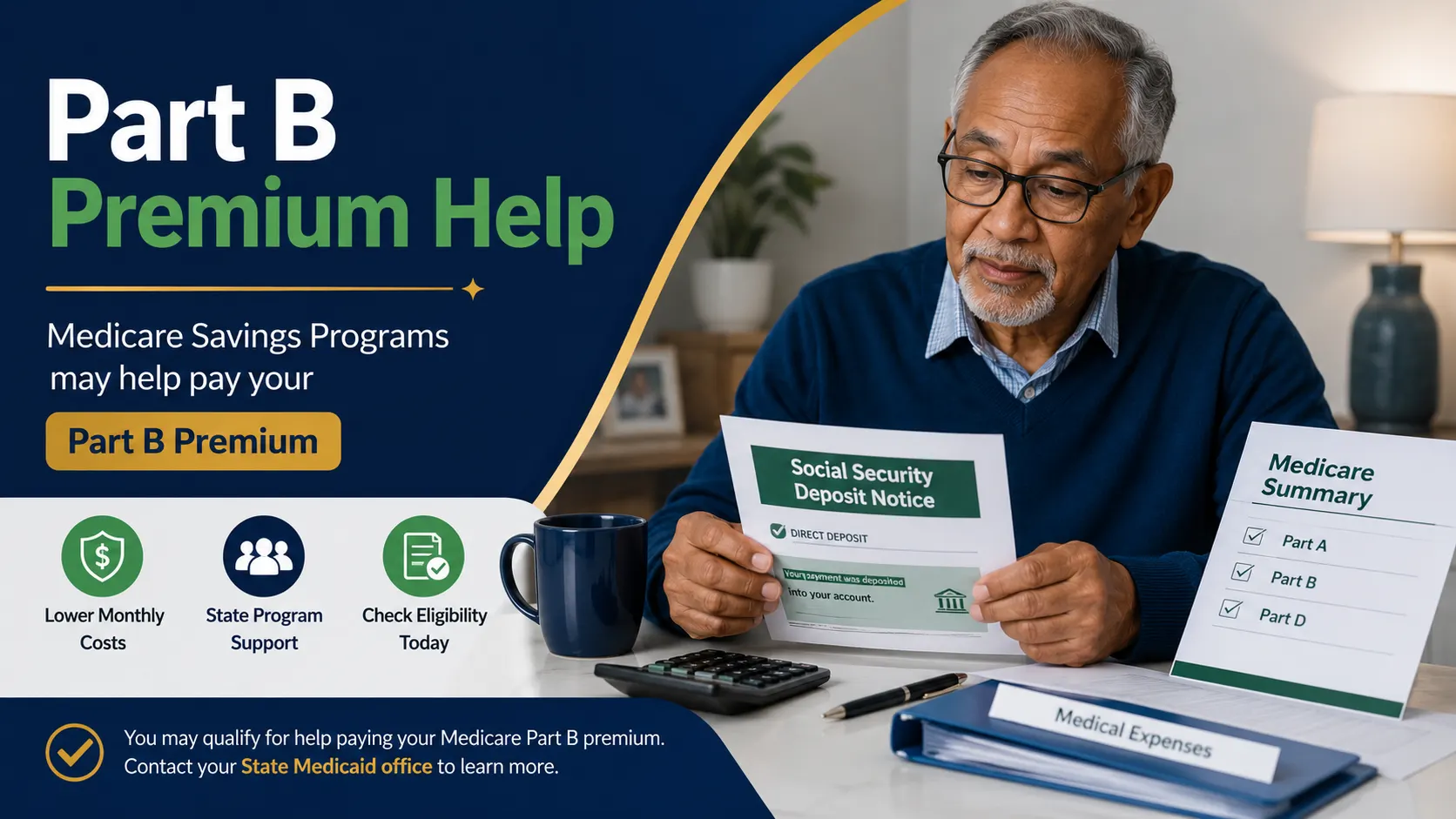
If your Medicare Part B premium is coming out of your Social Security check every month, it can feel frustrating, especially when your budget is already tight.
Many people first notice the problem when their monthly deposit is lower than expected. Some wonder why Medicare took money out again. Others thought Medicaid or a Medicare Savings Program was already paying the premium, but the deduction still appears.
Can a Medicare Savings Program stop the Part B premium from being taken out?
SLMB: Part B premium
QI: Part B premium, yearly application
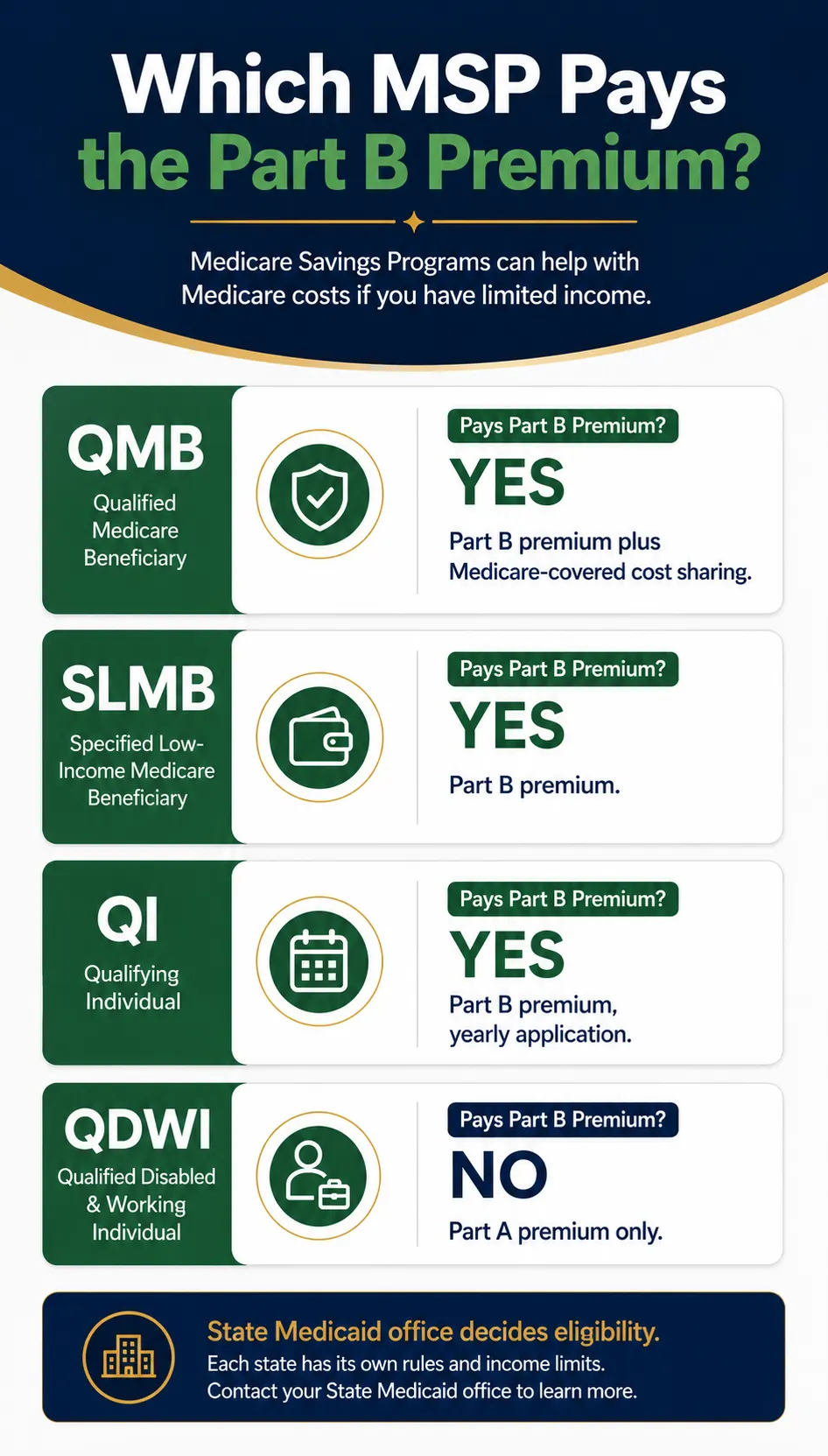
Important: A Medicare Savings Program can pay your Medicare Part B premium if you qualify for QMB, SLMB, or QI. QDWI does not pay Part B. It helps with the Part A premium only.
Quick Answer: Does MSP pay the Part B premium?
Yes. QMB, SLMB, and QI can pay the Medicare Part B premium if you qualify. QDWI does not pay Part B because it helps with the Medicare Part A premium only.
For the main overview, visit our Medicare Savings Program resource center.
A Medicare Savings Program can pay your Medicare Part B premium if you qualify for QMB, SLMB, or QI. These programs help people with Medicare who have limited income and resources. But there is one important detail: not every Medicare Savings Program pays the Part B premium.
Which Medicare Savings Programs Pay the Part B Premium?
| Medicare Savings Program | Does It Pay the Part B Premium? | Main Benefit |
|---|---|---|
| QMB | Yes | Helps with the Part B premium and may also help with Medicare deductibles, coinsurance, and copayments |
| SLMB | Yes | Helps pay the Part B premium |
| QI | Yes | Helps pay the Part B premium |
| QDWI | No | Helps with the Part A premium only |
QMB, SLMB, and QI can pay the Medicare Part B premium if you qualify.
Medicare.gov confirms that QMB helps pay Part B premiums, SLMB helps pay Part B premiums, and QI helps pay Part B premiums. It also explains that QDWI helps pay Part A premiums only. You can review the official details on the Medicare.gov Medicare Savings Programs page.
For a fuller comparison, see our guide to Medicare Savings Program types.
QMB: Help With the Most Medicare Costs
QMB is usually the most complete Medicare Savings Program because it may help with both the monthly premium and many Medicare-covered out-of-pocket costs.
QMB may help pay:
- ✓Medicare Part B premium
- ✓Medicare Part A premium, if you owe one
- ✓Medicare deductibles
- ✓Medicare coinsurance
- ✓Medicare copayments for Medicare-covered services
Helpful for: People who need more than premium help and want stronger protection from Medicare-covered medical bills.
For more detail, read our full QMB Medicare Savings Program guide.
SLMB: A Simple Program for the Part B Premium
SLMB is more limited than QMB, but it can still be very helpful. Its main purpose is to pay the Medicare Part B premium.
SLMB usually does not pay Medicare deductibles, coinsurance, or copayments. That means it may not protect you from every bill after you get care. But it can still help with one of the most painful monthly Medicare costs: the Part B premium.
In 2026, the standard Part B premium is $202.90 per month for most people. If that amount is being deducted from your Social Security payment, SLMB approval may eventually stop that deduction after processing.
Helpful for: People who mainly need help with the monthly Part B premium but do not qualify for QMB.
QI: Part B Premium Help With a Yearly Reminder
QI also helps pay the Medicare Part B premium. Like SLMB, it mainly focuses on premium help, not broader Medicare cost-sharing bills.
The important thing about QI is that it has yearly rules. People usually need to apply again every year. States also approve QI applications on a first-come, first-served basis, and people who had QI the previous year may receive priority.
Helpful for: People whose income may be too high for SLMB but who still need help paying the monthly Part B premium.
Can You Get Money Back for Part B Premiums Already Deducted?
If your Medicare Savings Program approval starts in a month when your Part B premium was still deducted, you may receive reimbursement later. This can happen when your state approves you for help, but the Social Security deduction takes time to stop.
For example, your Medicare Savings Program may be approved starting in January, but the Part B premium may still come out of your Social Security check for another month while records update. If the premium was deducted for a month the program should have covered, you may receive money back.
The timing depends on your state, your approval date, and how quickly the records are updated.
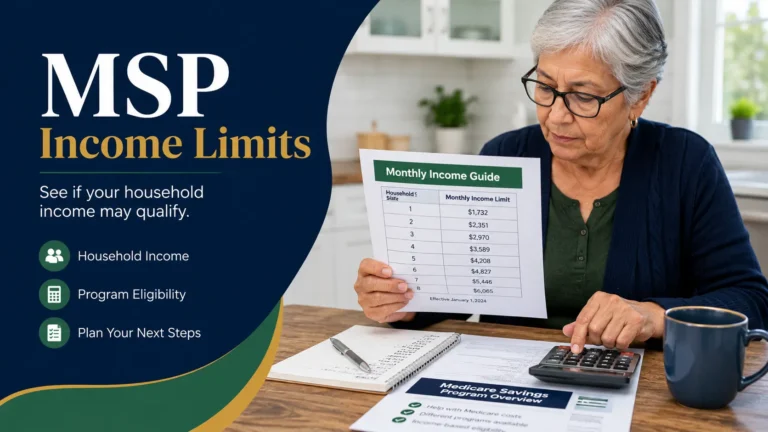
2026 Medicare Savings Program Income Limits
For 2026, Medicare.gov lists these federal monthly income limits for most states:
| Program | Individual Monthly Income Limit | Married Couple Monthly Income Limit |
|---|---|---|
| QMB | $1,350 | $1,824 |
| SLMB | $1,616 | $2,184 |
| QI | $1,816 | $2,455 |
For QMB, SLMB, and QI, Medicare.gov lists the 2026 resource limits as $9,950 for an individual and $14,910 for a married couple in most states. Limits are higher in Alaska and Hawaii, and some states may use different rules for counting income and resources.
This is important because you should not assume you are ineligible just because your income looks slightly above the national chart. Some states count income differently. Some may have higher limits.
If you are close to the limit, apply and let your state decide. For the complete table, see our Medicare Savings Program income limits guide. You can also review our eligibility overview: who qualifies for a Medicare Savings Program.
How To Apply for Help With the Part B Premium
To get help paying your Medicare Part B premium, apply through your state Medicaid office. Medicare Savings Programs are not private insurance plans, so you do not apply through a Medicare agent or insurance company.
Most states give you a few ways to apply:
Apply online
- ✓Go to Medicaid.gov’s state contact page, choose your state, and look for your state’s Medicaid or benefits portal.
- ✓The application may use words like Medicare Savings Program, Medicare Premium Assistance, Medicare Buy-In, or Help Paying Medicare Costs.
Use a paper form
- ✓Download the CMS Medicare Savings Program model application or Medicaid application from your state Medicaid website.
- ✓Some states have a short MSP-only form, while others use one larger Medicaid application that also checks for other benefits.
Mail the application
- ✓Use the mailing address printed on your state’s application form.
- ✓There is no single national mailing address for Medicare Savings Programs, so do not mail it to Medicare or Social Security unless your state tells you to.
Apply by phone
Call your state Medicaid office and ask how to apply for help paying your Medicare Part B premium.
- ✓You can also call 1-800-MEDICARE / 1-800-633-4227 for help finding your state office. TTY users can call 1-877-486-2048.
Get free help from SHIP
- ✓Your local SHIP program can help you find the right state form, understand QMB, SLMB, and QI, and prepare your documents.
- ✓You can also call SHIP at 1-877-839-2675.
Before applying, gather your Medicare card, Social Security number, proof of income, bank or resource information, proof of address, identification, and any Medicaid, SSI, SNAP, or benefit notices you already have.
If you do not know where to start, Medicare says you can call 1-800-MEDICARE for help getting your state Medicaid office phone number. TTY users can call 1-877-486-2048.
Ready to check the next step?
If the Part B premium is reducing your Social Security payment, start with your state Medicaid office and let the state decide whether QMB, SLMB, or QI applies.
What Happens After You Apply?
After you apply, your state reviews your income, resources, Medicare status, and other eligibility details.
You usually do not choose QMB, SLMB, or QI yourself. You apply, and the state decides which Medicare Savings Program you qualify for.
If you are approved for a program that pays the Part B premium, the state begins the payment process. If your Part B premium was being deducted from Social Security, that deduction may stop after the systems update.
Watch for letters from your state Medicaid office. If they ask for more information, respond quickly. A missing bank statement, income proof, or renewal form can delay approval or cause your help to stop.
Also remember that a Medicare Savings Program is connected to Medicaid, but it is not always the same as full Medicaid. You can read more here: Is a Medicare Savings Program the same as Medicaid?
What If Your Part B Premium Starts Being Deducted Again?
If your Social Security check suddenly goes down because the Part B premium starts coming out again, do not ignore it.
This may mean your Medicare Savings Program has stopped, paused, or needs renewal.
Common reasons include:
- ✓Missed renewal paperwork
- ✓Missing documents
- ✓Income changes
- ✓Resource changes
- ✓Address changes
- ✓Mail problems
- ✓State processing delays
Call your state Medicaid office. If the program ended because of missing paperwork, ask whether you can send the documents, appeal, or reapply. Waiting can mean more months of Part B deductions.
Common Mistakes To Avoid
- !Do not assume all Medicare Savings Programs work the same way. QMB, SLMB, QI, and QDWI each help with different costs.
- !Do not assume only QMB pays the Part B premium. SLMB and QI can pay it too.
- !Do not assume SLMB or QI will cover your Medicare copays. They mainly help with the Part B premium.
- !Do not ignore renewal letters. If your Medicare Savings Program ends, your Part B premium may start being deducted again.
- !Do not use random websites before checking official sources. Start with Medicare.gov, Medicaid.gov, your state Medicaid office, SHIP, or 1-800-MEDICARE.
- !Do not assume you are over the limit without applying. Your state may count income or resources differently.
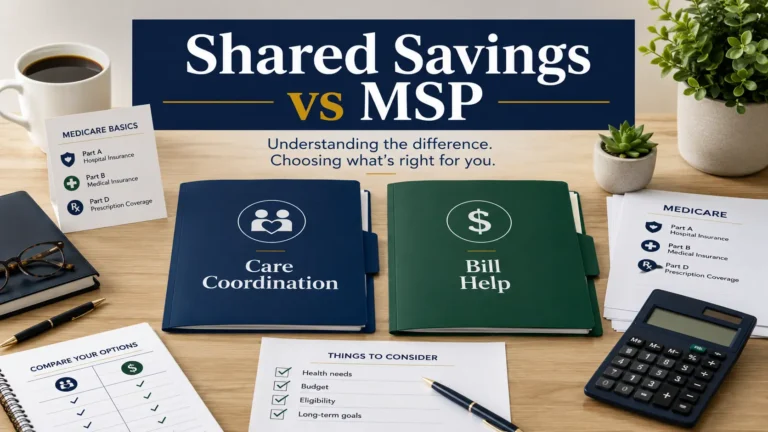
Also, do not confuse a Medicare Savings Program with the Medicare Shared Savings Program. The Shared Savings Program is about ACO care coordination, not Part B premium payment. See the comparison here: Medicare Shared Savings Program vs Medicare Savings Program.
FAQs
Does the Medicare Savings Program pay the Part B premium?
Yes. QMB, SLMB, and QI can pay the Medicare Part B premium if you qualify.
Which Medicare Savings Program pays the Part B premium?
QMB, SLMB, and QI pay the Part B premium. QDWI does not pay Part B.
Does QMB pay the Part B premium?
Yes. QMB pays the Part B premium and may also help with Medicare deductibles, coinsurance, and copayments.
Does SLMB pay the Part B premium?
Yes. SLMB helps pay the Part B premium. It usually does not pay Medicare copays or deductibles.
Does QI pay the Part B premium?
Yes. QI helps pay the Part B premium. You must apply every year, and approval may depend on state funding and first-come, first-served rules.
Does QDWI pay the Part B premium?
No. QDWI helps with the Medicare Part A premium only.
Will my Social Security check increase if MSP pays my Part B premium?
It may. If your Part B premium was being deducted from Social Security, your check may increase after the program starts paying the premium.
How long does it take for the Part B deduction to stop?
Timing varies by state and case. It may take time for the state Medicaid office, Medicare, and Social Security to update their records.
Can I get money back if Part B premiums were deducted after approval?
Sometimes. If your approval covered months when premiums were still deducted, you may receive reimbursement. Ask your state Medicaid office about your effective date and premium reimbursement.
Where do I apply for help paying my Part B premium?
Apply through your state Medicaid office. You can also call 1-800-MEDICARE or contact SHIP for help finding the right office.
Conclusion
A Medicare Savings Program can pay your Medicare Part B premium if you qualify for QMB, SLMB, or QI. For many people, this means the monthly Part B premium may stop being deducted from their Social Security check after approval is processed. That can make a real difference because the standard Part B premium is $202.90 per month in 2026.
QMB gives the broadest help because it may also cover Medicare deductibles, coinsurance, and copayments. SLMB and QI mainly help with the Part B premium. QDWI does not pay Part B.
If the Part B premium is reducing your Social Security payment, apply through your state Medicaid office. Even if you are close to the income or resource limit, it is worth applying and letting your state decide.



Will Your Social Security Check Go Up?
If your Part B premium is currently being taken out of your Social Security payment, and you are approved for QMB, SLMB, or QI, the deduction may stop once the change is processed. That can make your monthly Social Security deposit higher.
For example, if $202.90 is being deducted for the standard 2026 Part B premium, your check may increase by about that amount once the Medicare Savings Program starts paying the premium. But this is not always instant.
Many people expect their next check to change right away after approval. Sometimes it takes longer because the state Medicaid office, Medicare, and Social Security records have to be updated.