Will I Lose My Medicaid If I Get Medicare at 65? (2026 Dual-Eligibility & MSP Transition Guide)
Turning 65 does not automatically end Medicaid. Learn how Medicare, ABD Medicaid, and 2026 QMB, SLMB, and QI assistance work together.
Independent educational information only. Applications and final eligibility decisions are handled by state Medicaid agencies.
Eligibility for a Medicare Savings Program is not decided by one simple number. It depends on your Medicare status, your monthly income, your resources if your state counts them, where you live, and your state Medicaid rules. This section explains those rules in plain language, so you can see how they fit together before you apply. Nothing here is a promise of approval, because your state Medicaid office makes the final decision. In 2026, Medicare.gov listed these federal monthly income limits for most states. For QMB, the limit was 1,350 dollars for one person and 1,824 dollars for a couple. For SLMB, it was 1,616 dollars for one person and 2,184 dollars for a couple. For QI, it was 1,816 dollars for one person and 2,455 dollars for a couple. For QDWI, it was 5,405 dollars for one person and 7,299 dollars for a couple. The resource limits for QMB, SLMB and QI were 9,950 dollars for one person and 14,910 dollars for a couple, while QDWI used 4,000 dollars for one person and 6,000 dollars for a couple. Alaska and Hawaii may have higher income limits, and some states use higher limits or count income and resources differently. That is why a guide in this section will often talk about more than the federal chart. Some states have no asset test for MSP, some use higher income limits, and some have their own names for the same program levels. A few states also treat people who already have Medicaid differently, and turning 65 can change how Medicare and Medicaid work together. If you already have Medicaid and then get Medicare at 65, your coverage does not always end, but the way the two programs work together can change, and you may need to apply for MSP help separately. Read the guide that matches your state or your question, note the income and resource figures it gives, and then check them against your state Medicaid office. Bring your Medicare card, proof of income, bank statements and proof of address when you apply, because states often ask for those papers. If you are turned down, read the denial guide as well, because a denial is not always the end of the story, and your state may have an appeal or a review step.

Turning 65 does not automatically end Medicaid. Learn how Medicare, ABD Medicaid, and 2026 QMB, SLMB, and QI assistance work together.

Last verified: October 12, 2026. Oregon Medicare Cost Assistance Guide Oregon Medicare Savings Program 2026: No Asset Limit, ONE Application and Income Limits Oregon Medicare Savings Programs may help eligible Medicare beneficiaries pay Medicare premiums. QMB may also pay Medicare-covered deductibles, coinsurance and copayments. Oregon does not apply an asset limit to its Medicare Savings…

Last verified: October 12, 2026. Louisiana Medicare Cost Assistance Guide Louisiana Medicare Savings Program 2026: No Asset Test, Form 1-MB and Income Limits Louisiana Medicare Savings Programs may help eligible Medicare beneficiaries pay the Part B premium. QMB may also pay eligible Part A premiums and Medicare-covered deductibles, coinsurance and copayments. Reviewed August 5, 2026,…

Last verified: October 12, 2026. Indiana Medicare Cost Assistance Guide Indiana Medicare Savings Program 2026: Higher Income Limits and How to Apply Indiana uses higher income limits than the basic federal figures shown on Medicare.gov. Eligible residents may receive help with the Medicare Part B premium and, under QMB, Medicare-covered deductibles, coinsurance and copayments. Reviewed…

Last verified: October 12, 2026. Washington Apple Health Medicare Assistance Guide Washington Medicare Savings Program: 2026 Income Limits, Benefits and Application Steps Washington’s Medicare Savings Programs may help eligible Medicare beneficiaries pay their Part B premium and, under QMB, Medicare-covered deductibles, coinsurance and copayments. Washington does not use an asset or resource test for MSP…

Last verified: October 12, 2026. Massachusetts Medicare Help for 2026 Massachusetts Medicare Savings Program 2026 MassHealth may pay your Medicare Part B premium, provide QMB protection from Medicare cost-sharing, enroll you in Extra Help, and connect you with Health Safety Net assistance. Massachusetts also uses higher income limits and no MSP asset test. Reviewed for…

Last verified: October 12, 2026. Virginia 2026 Guide Virginia Medicare Savings Program: Income Limits & How to Apply Virginia Medicare Savings Programs may help eligible Medicare beneficiaries pay monthly premiums. QMB may also protect an eligible person from Medicare-covered deductibles, coinsurance and copayments. Updated with Virginia’s January 2026 limits, Cardinal Care forms and Cover Virginia…

Last verified: October 12, 2026. North Carolina 2026 Guide North Carolina Medicare Savings Program: MQB Benefits, Limits and How to Apply North Carolina’s Medicare Savings Programs, commonly called MQB programs, may pay the Medicare Part B premium. MQB-Q may also protect eligible beneficiaries from Medicare-covered deductibles, coinsurance and copayments. Updated with April 2026 limits and…

Last verified: October 12, 2026. Pennsylvania 2026 Guide Pennsylvania Medicare Savings Program Income Limits, Benefits and How to Apply Pennsylvania Medicare Savings Programs may help eligible Medicare beneficiaries pay Medicare premiums and, through QMB, certain Medicare deductibles, coinsurance and copayments. Pennsylvania administers this help through the Department of Human Services. Reviewed for 2026 Medicare limits…

Last verified: October 12, 2026. New York 2026 Guide New York Medicare Savings Program Income Limits and Application If you have Medicare and live in New York, a Medicare Savings Program may help pay the premium deducted from your Social Security benefit. QMB may also protect you from Medicare-covered deductibles, coinsurance and copayments. Independent information…

Last verified: October 22, 2026. Resource Limits Guide Medicare Savings Program resource limits can feel confusing, especially when you are living on a fixed income and trying to protect a small emergency cushion. Many people worry that savings, a car, or a home will stop them from getting help with Medicare costs. In many cases,…
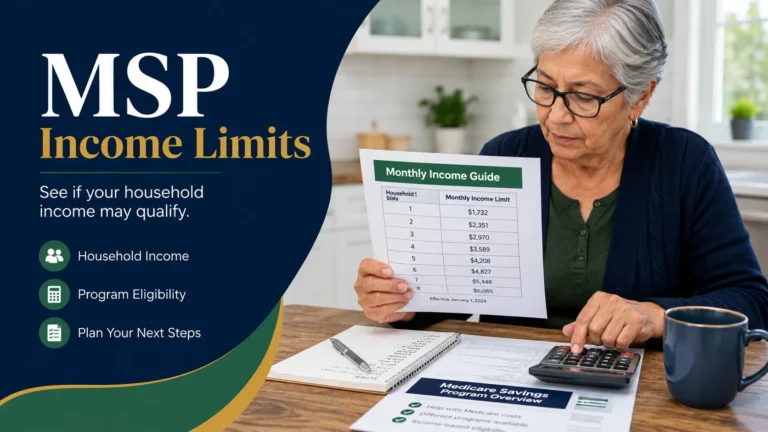
Last verified: October 22, 2026. Income Limits Guide Medicare costs can feel heavy when most of your income comes from Social Security, a small pension, disability benefits, or part-time work. Even one monthly premium can make it harder to pay for groceries, rent, prescriptions, or transportation to doctor visits. A Medicare Savings Program may help…
Last verified: November 5, 2026. Eligibility Guide Medicare can help cover hospital care, doctor visits, preventive services, and other medical needs. But many people still have premiums, co-pays, deductibles, lab charges, and prescription costs that are hard to manage every month. You may qualify for a Medicare Savings Program if you have Medicare, meet your…